Author: wildedgesfarmmn

  • 2025 Holiday Craft Markets!

    Whoa has the summer flown by, and now it’s winter! We spent most of the summer building the new high tunnel greenhouse for our market garden, beginning construction of the mill shed for the sawmill, attending our first farmers markets, and prepping for two craft markets this winter.

    This coming Thursday, December 4th we’ll be at Rapids Brewing in Grand Rapids for the Wild Winter Fair!

    Visit our booth to check out our selection of:
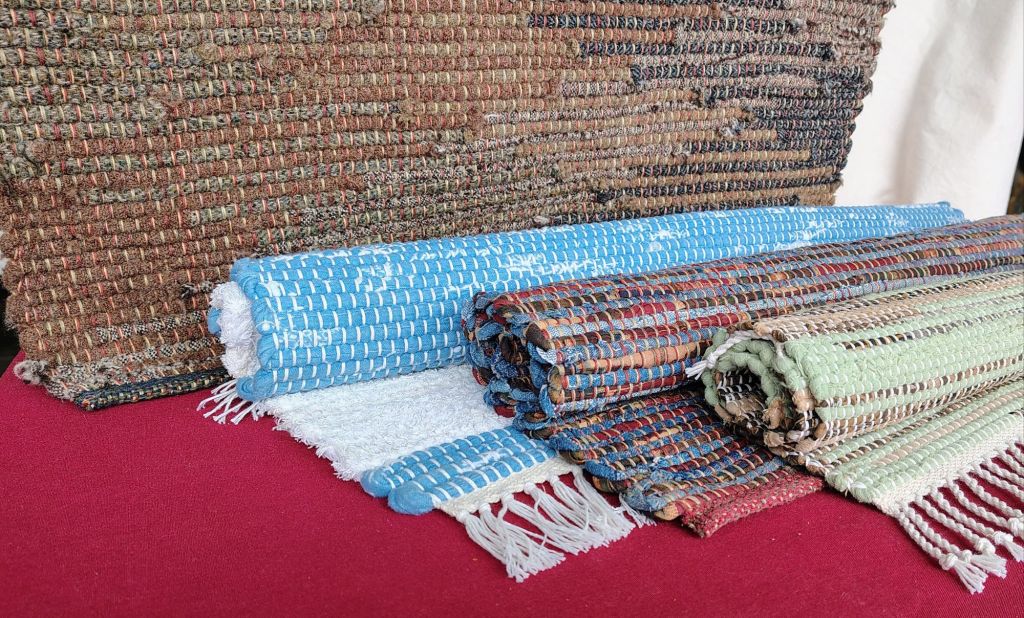
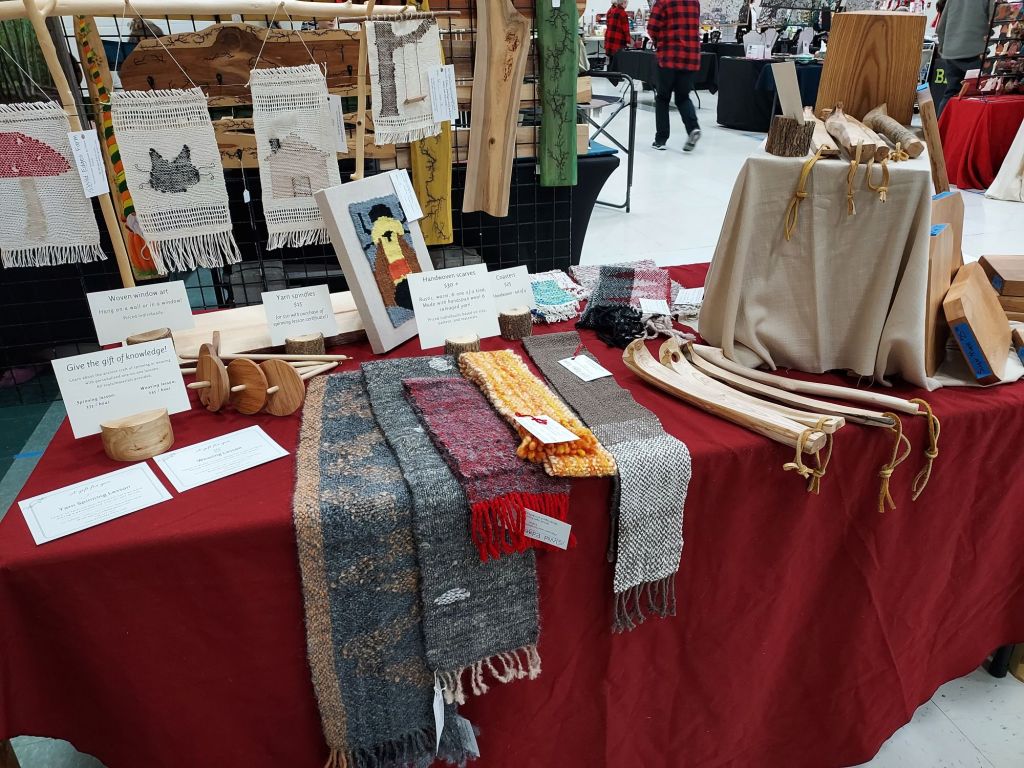
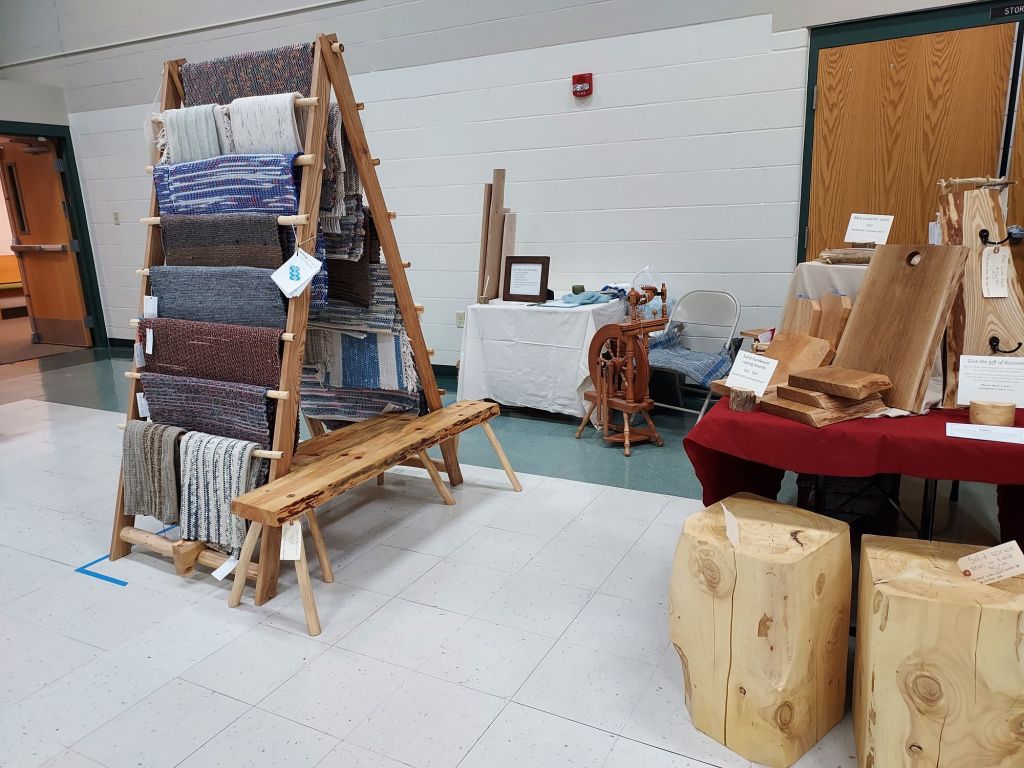
    Handwoven rag rugs (unique, and machine washable!)
    Solid hardwood cutting boards (durable and gorgeous!)
    Handmade back scratchin’ sticks (functional and adorable, made from real sticks!)
    – A selection of wood furniture and handwoven scarves

    AND – we’re offering a very unique gift idea for the curious person in your life: gift certificates for one-on-one forest consulting services with Casey or weaving/spinning lessons from Shara.

    See you at the Wild Winter Fair!

    Craft fair recap: On November 8th we had the pleasure of selling our crafted items at the Zion Lutheran Church’s Wandering Reindeer Bazaar. We had a lot of fun talking with visitors about our products and making good connections! Our spinning wheel (named Emily) is always a big hit at markets; she is hypnotizing to some…
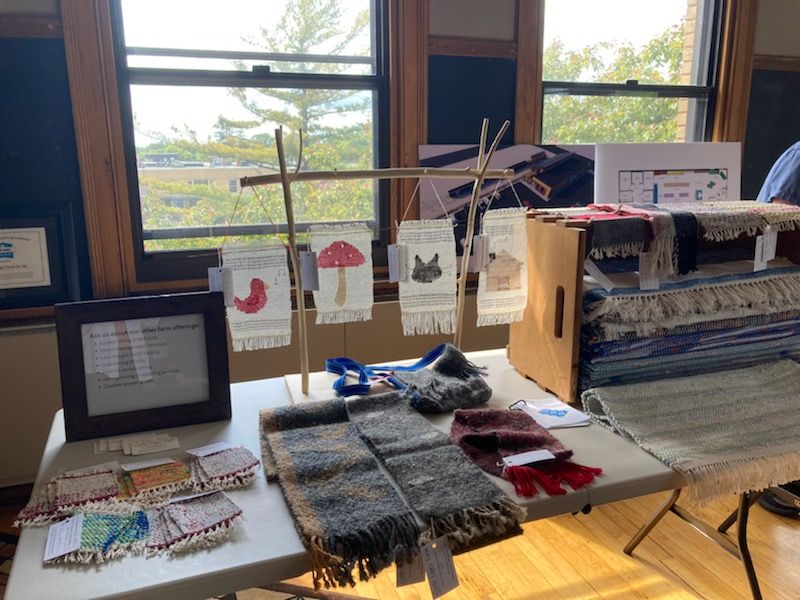
    We forgot to take photos during the event but here’s a snapshot of our booth and some of the items:

    Happy holidays to you all, and if you’re still shopping for a gift for someone special this season we hope you’ll shop local and support small businesses like ours this season!

    -Shara & Casey
  • Re-sawing Dried Pine Lumber

    Re-sawing Dried Pine Lumber

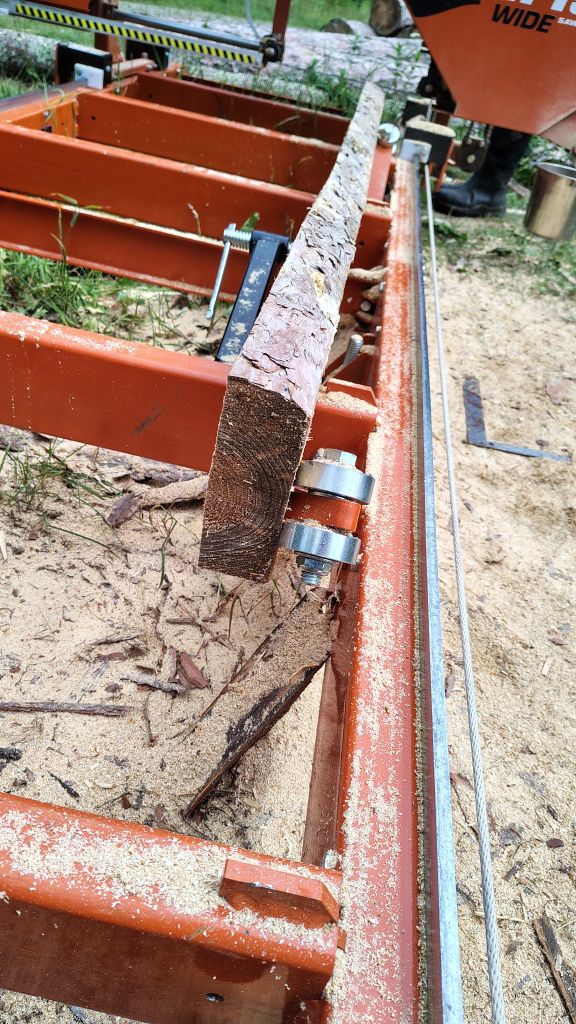
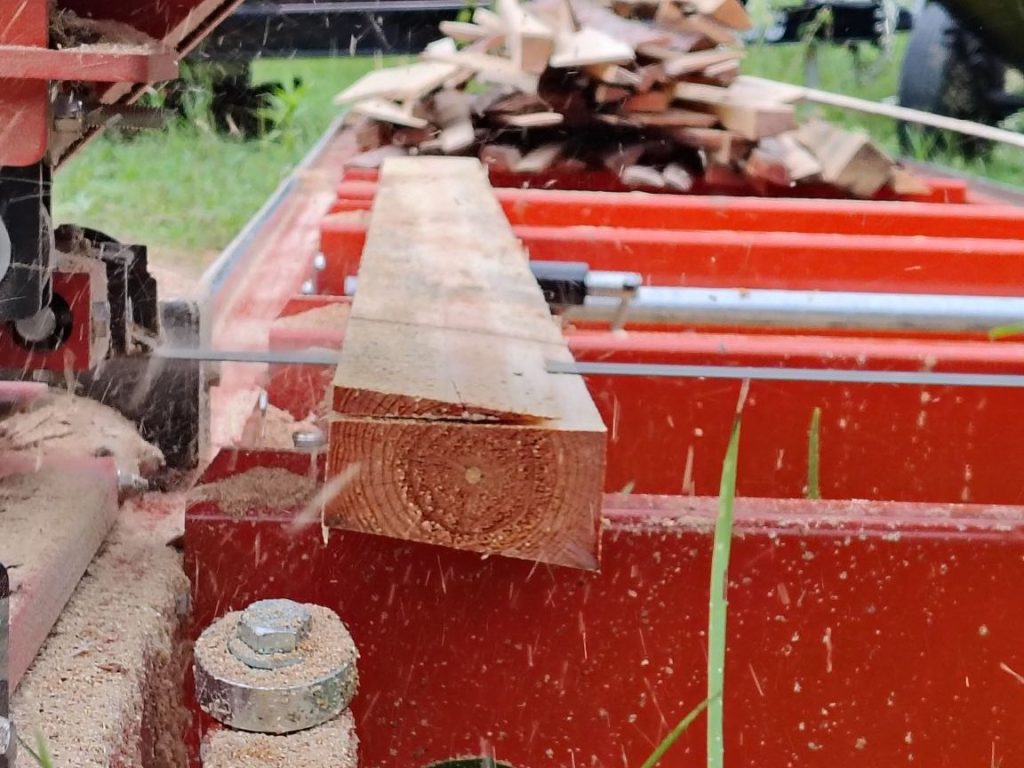
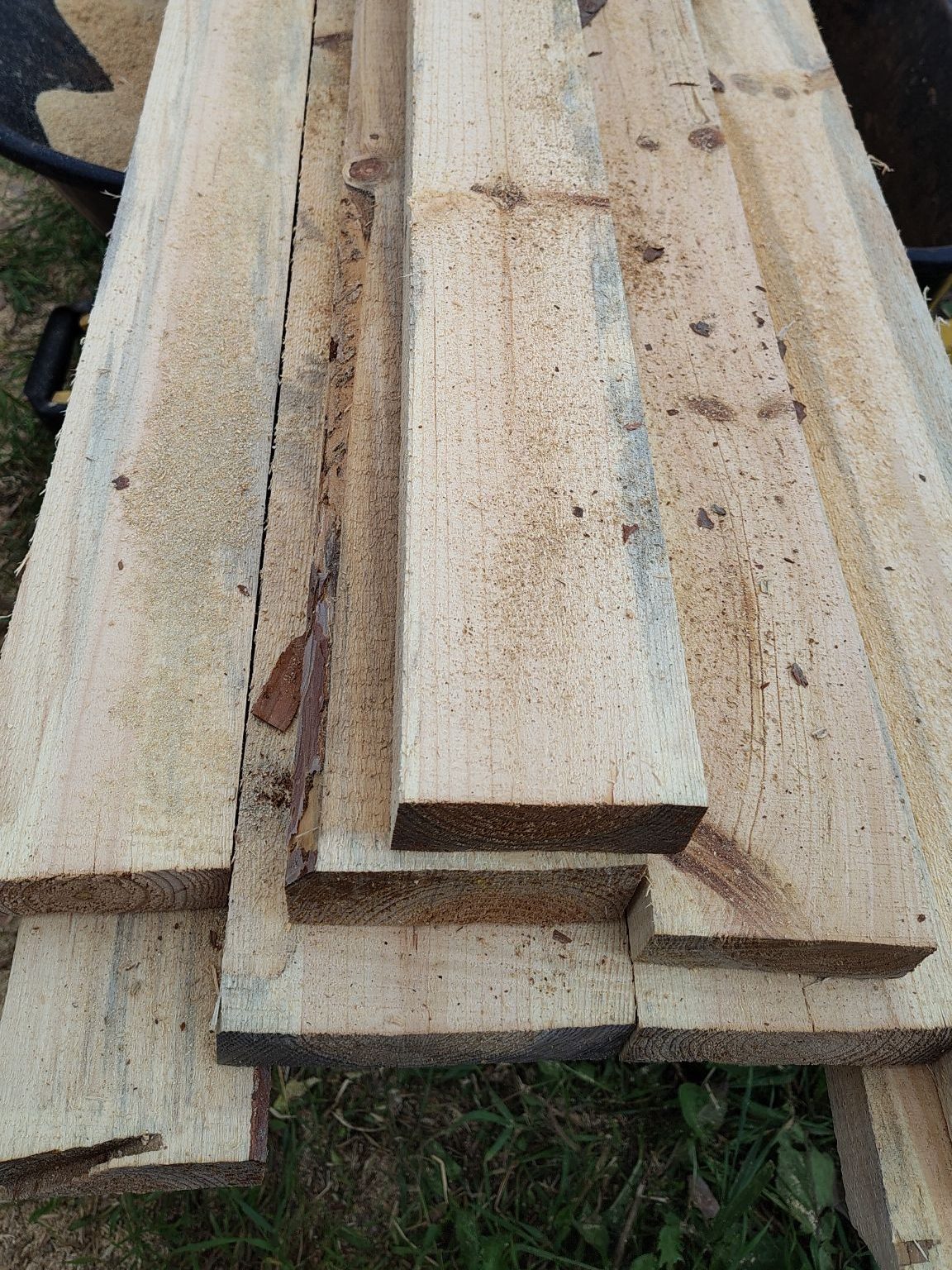
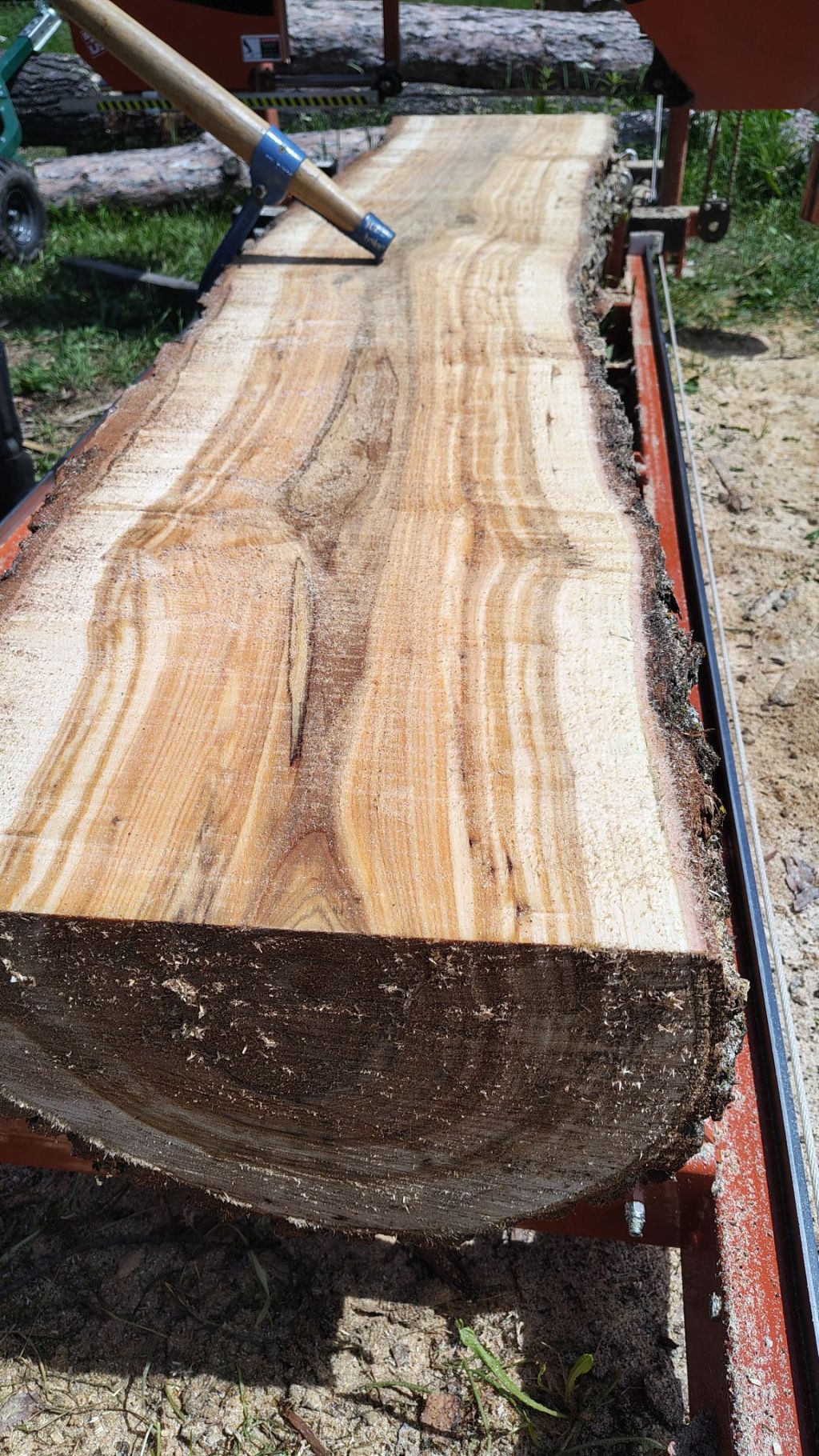
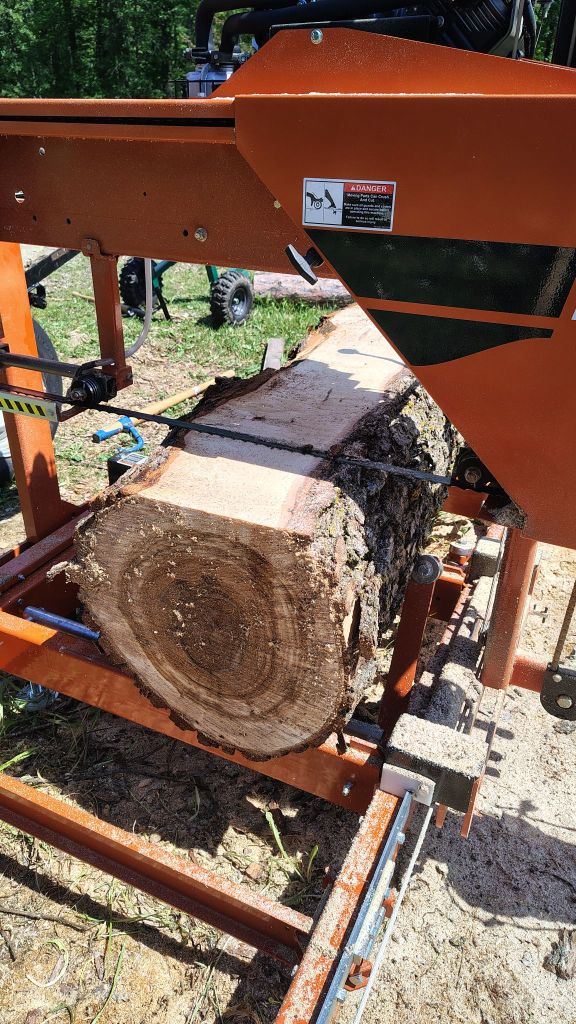
    A while back, we had the opportunity to harvest some really spindly, small red pine from a grove which had never been thinned. A custom sawyer milled them for us at 2 1/4″ to give us the chance to use them for something. That time never really came because it’s very tedious to cut live edge off a board with a table saw. Today, we have the sawmill to help with this and it is uniquely designed to cut rounded, bumpy edges off a piece of wood! Just clamp it in and it is held securely while a flat, straight cut is made.

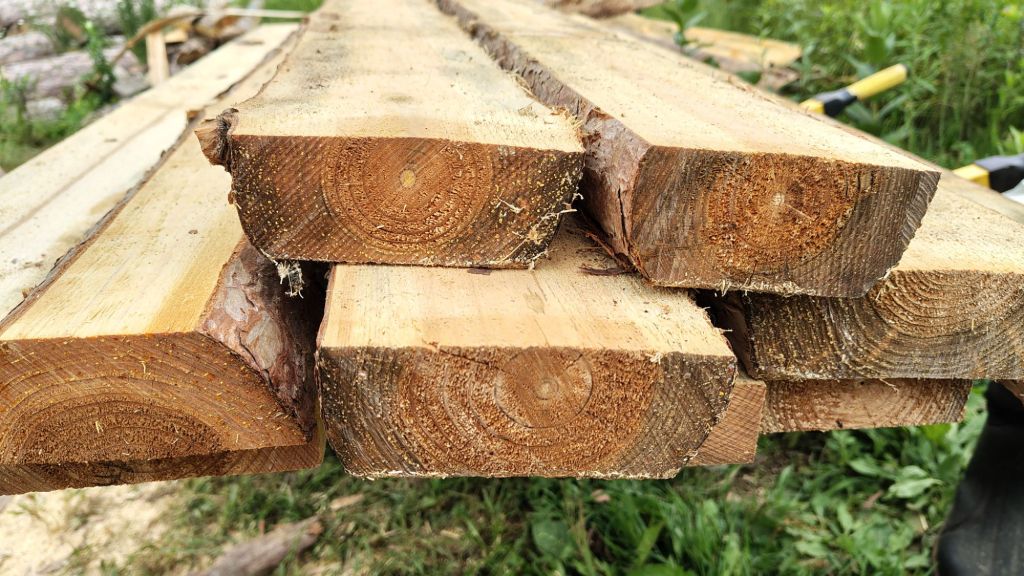
    We also discovered these pieces all twisted after drying, too. This is caused by the uneven growth rate throughout the tree’s life. They grew quickly for the first 10-15 years and then became overcrowded and grew very slowly for the remaining 50 years.

    Note the wide rings at the center and the narrow rings at the edges.

    By clamping one end of the piece square to the mill, the twist can be cut out by removing wedge-shaped slices from each side. In this case, a 2.25″ thick piece of twisted wood will become a 1.75″ thick piece of flat wood.

    A stack of finished, flat lumber

    Since these pieces have already been dried and warped before re-sawing, their flatness will be much more durable than if they were fresh cut. We still have nearly 100 of these boards left to square up to build the floor of our future sawmill building!

    When you’re going through your lumber piles and find some thicker timbers or beams (without nails!) that have dried or warped in challenging ways, keep in mind that re-sawing them is a way to put them back to use. Check out our Custom Milling page for more information.

  • First Friday Art Walk – June 2025

    First Friday Art Walk – June 2025

    Every month on the first Friday, Grand Rapids hosts an art walk in the downtown area near Old Central School. We had the privilege of attending as artists on behalf of Free Range Food Co-op on June 6th.

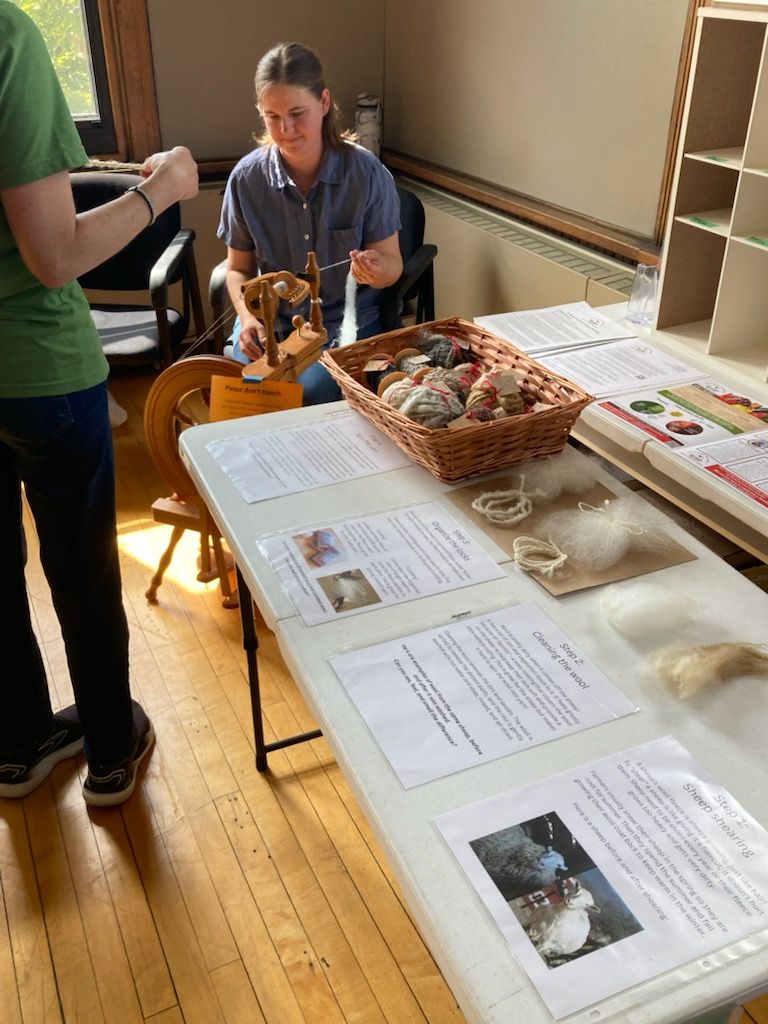
    Fiber preparation table with Shara spinning yarn in the background

    There was an educational table introducing visitors to the process of harvesting, washing, and preparing wool. We had a basket of hand-spun yarn samples made by Shara to show different textures and sizes.

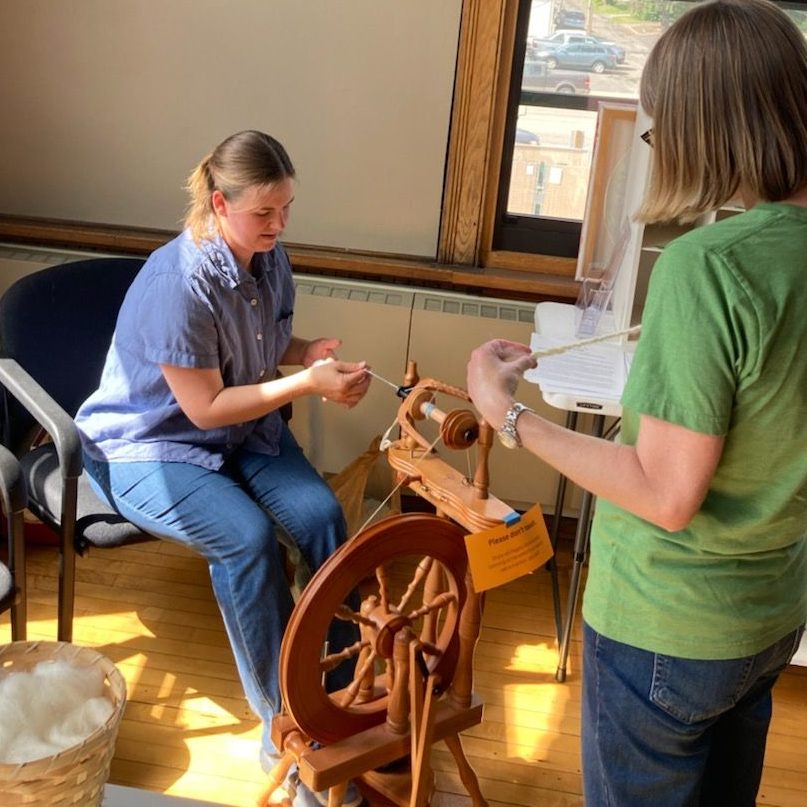
    We demonstrated spinning on the new Ashford Traveler wheel, which was a big hit. Having a handcraft in motion seems to invite conversation and questions about what’s going on.

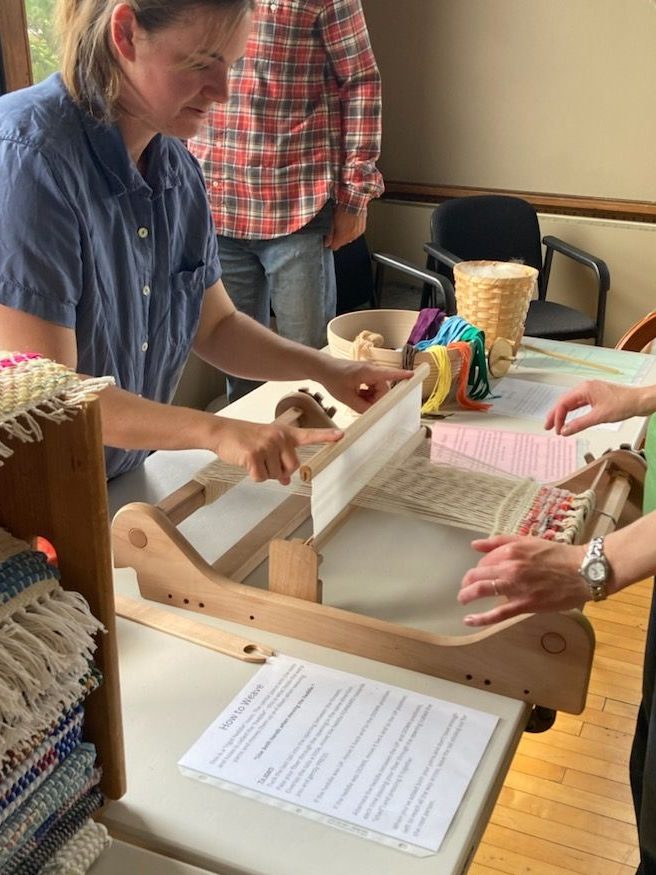
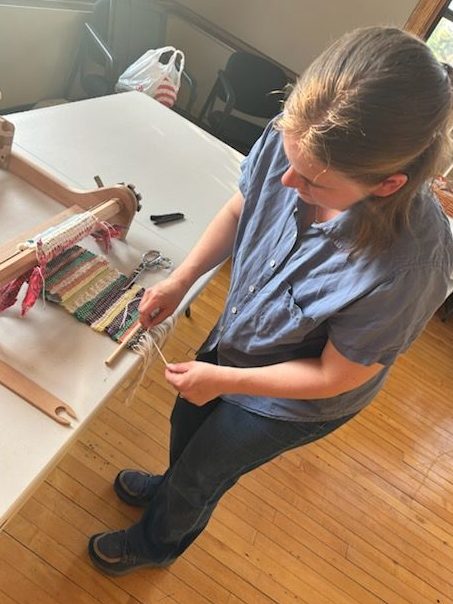
    Free Range Food Co-op is working to open a community owned grocery store right now, so we also had a “community weave” project where visitors could add a few pieces of fabric or yarn to a small wall-hanging project on the rigid heddle loom. It symbolizes the process of combining smaller pieces into a larger, more beautiful and impactful community project.

    Tables set up at a craft fair

    The budding inventory of wool scarves, cotton rugs, and decorative transparent tapestries available for sale on display at the art fair.

    Check out our Fiber Craft page for more information on spinning or weaving lessons. Contact Shara to see what’s available for sale or to discuss a custom project.

  • Milling Salvaged Willow

    Milling Salvaged Willow

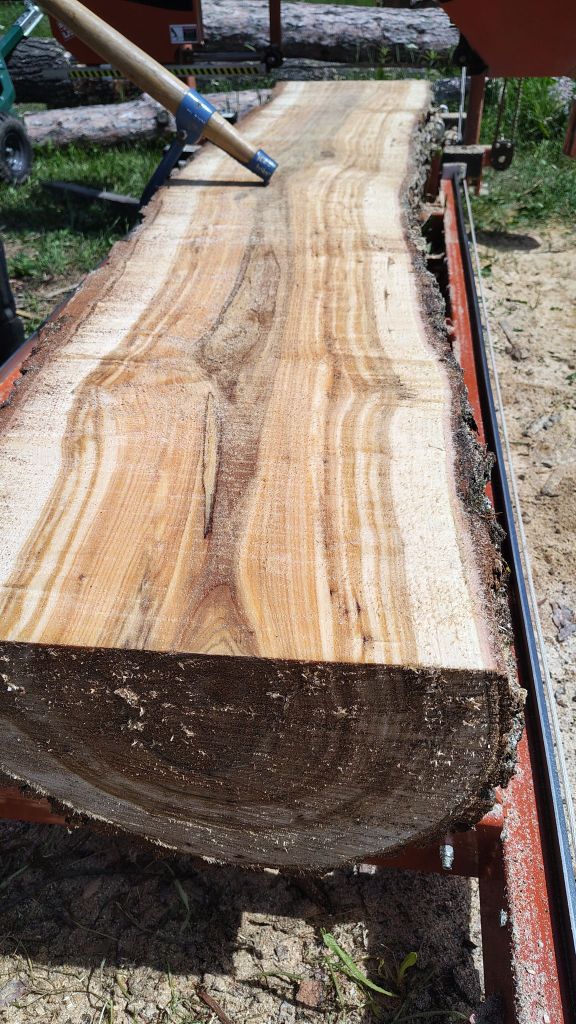
    Willow log after first cut on sawmill

    Recently, we had the opportunity to mill two large logs from a 90 year old peach-leaved willow that came down in a storm. At first, we were skeptical it would yield much good lumber because willow are known to be susceptible to heart rot. But these 20 inch diameter logs had a lot of great grain figuring caused by heartwood staining and the early stages of decay while still being solid.

    A large willow log milled in half on the sawmill showing the heartwood streaks

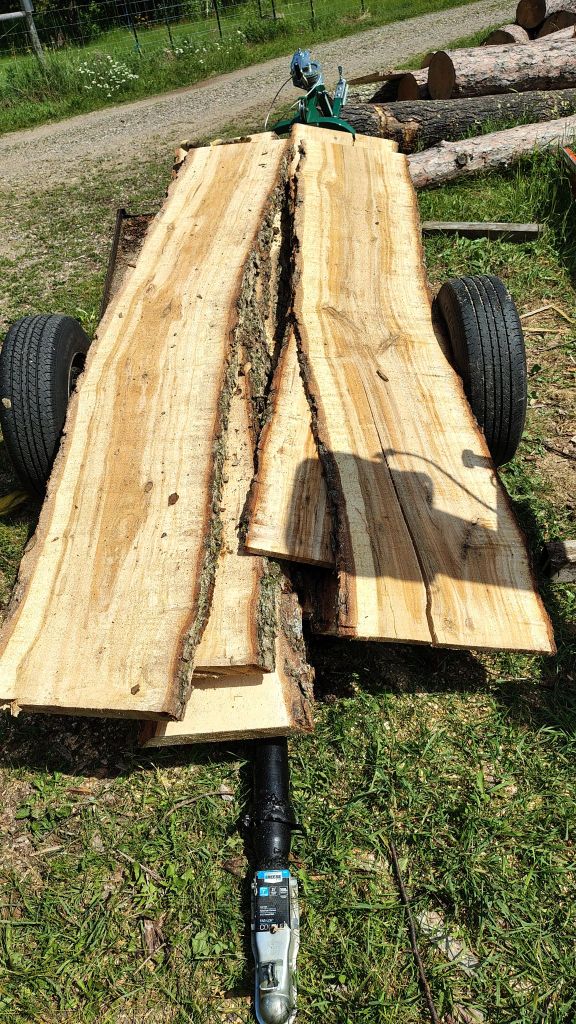
    These beautiful logs were mostly cut into 2.25″ live-edge slabs to be used for making small tables or 1″ thick pieces for shelves where the live edges add to the character of the piece. Some shorter logs were cut even thicker to be used as benches. They were all left at full width with live edge on both sides for maximum flexibility in future use – they can be cut down to clean, square lumber later if needed.

    A pile of freshly milled wide willow boards on a trailer

    These pieces have been stacked to dry and are available for sale as-is or they can be re-sawed and customized to fit your next project. Check out the Custom Milling page for more information.

  • Building Garden Beds

    Building Garden Beds

    When we established our garden, the fine soils and lack of slope made growing difficult. The ground would easily flood and then stay saturated for a long time, setting back soil temperatures, cultivation, planting, and harvesting. To alleviate this, we began using raised beds. This creates growing space that’s higher in elevation than the surrounding walkways, leaving it with better drainage, aeration, and sun exposure. Together, these improvements have allowed soil work and planting to occur 2-3 weeks earlier than before.

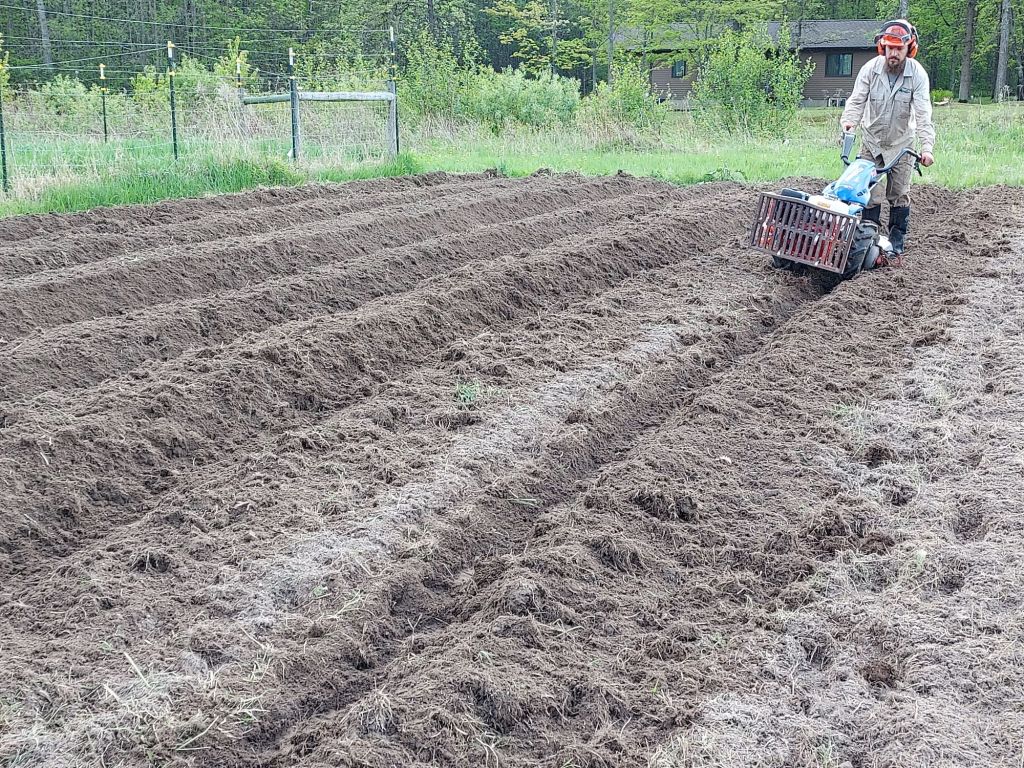
    After a couple years of shaping them by hand with shovels and rakes, it was clear that the benefits of raised beds were worth investing in equipment to make the process faster and easier. We now use a “rotary plow” on the BCS 2-wheel tractor to throw soil from the walkway onto the planting bed. This creates an elevation difference of 6-10″ between the beds and the 12″ wide walkway. It is a fast implement to run, shaping a 100 foot raised bed in about two minutes.

    If you have challenging soil holding you back, let us shape up some raised beds and start enjoying a more productive, healthy garden. Contact Casey or learn more at our From the Garden page.