Weeding and weaving… That’s the name of the game at the farm this week! The hot weather really got the weeds fired up, and most of the mustard greens and radishes already bolted (it was 90 degrees last week and today I lit a fire in the woodstove because 60 degrees with an overcast sky just felt so chilly…)
Anyway, back to the greens: I think the bigger leaves on them are still totally fine to use in cooked dishes as they are less tender for salad greens now. The goats love them too so they don’t go to waste!
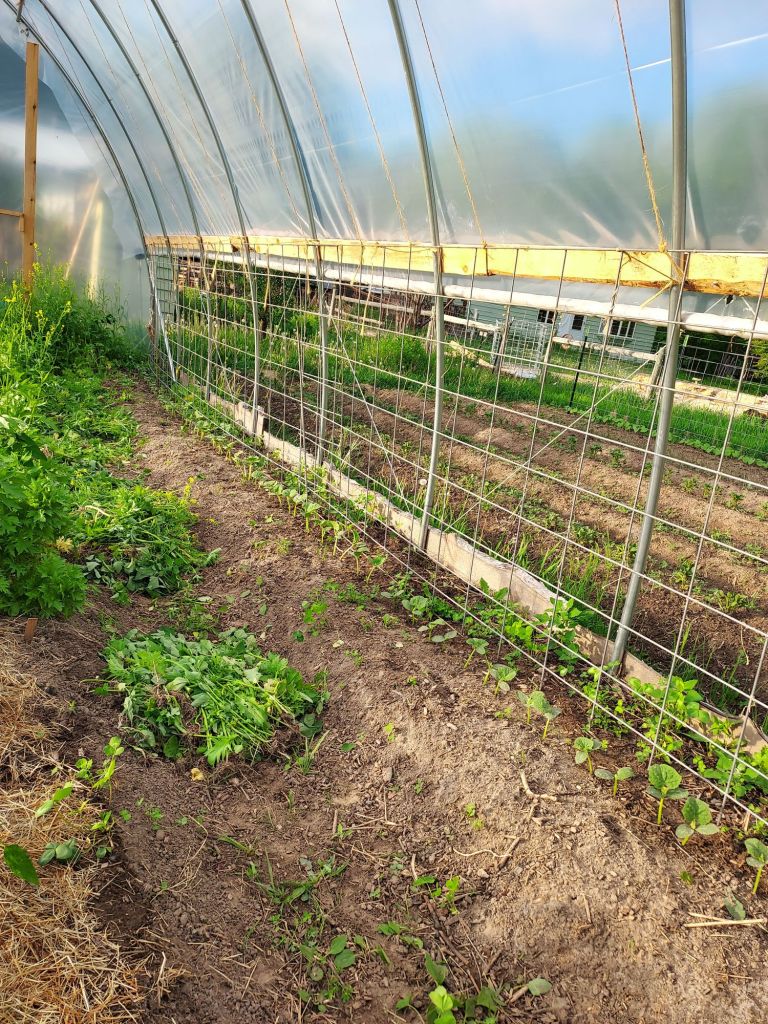
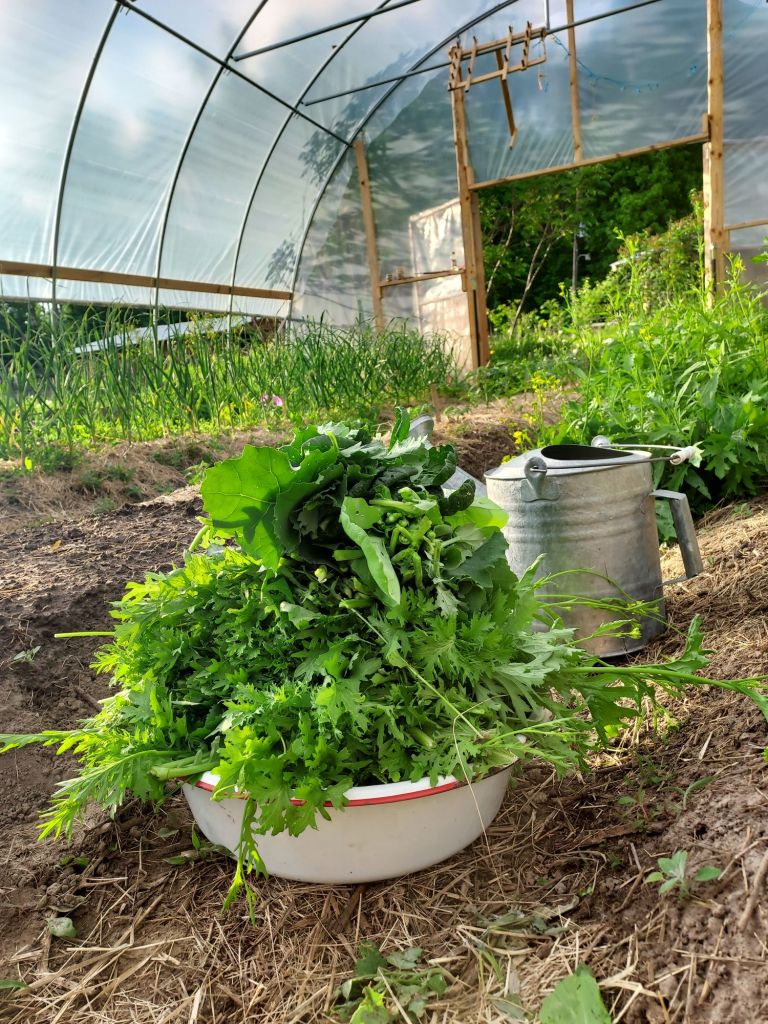
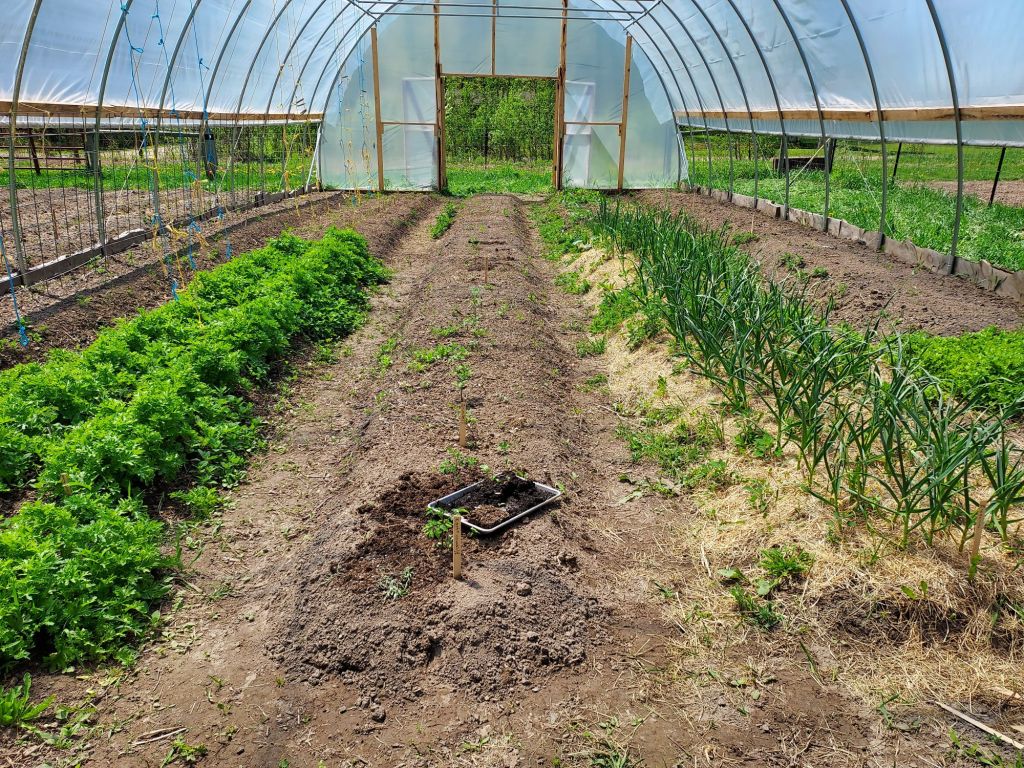
You can see the cucumbers now! It’s the “National Pickling” variety that we have saved seeds from for a couple years. The enamel basin holds 3 gallons, and that sucker was packed and heaping with mustard, lambs quarter, radish, and other greens for freezing
The volunteer mustard from last year was overtaking the cucumbers babies but at least when I was weeding and thinning the cukes, I was able to collect about 8lbs of greens to freeze! We don’t do anything fancy with the greens; just rinse, roughly chop, and pack them a little snugly into canning jars for the freezer. No blanching or pre-freezing in a single layer (ain’t nobody got time for that). Because there’s no liquid in the greens, the jars don’t burst in the freezer and we find a quart is great for a big batch of soup, and a pint of greens works for stir fries and pastas. Just thaw and cook!
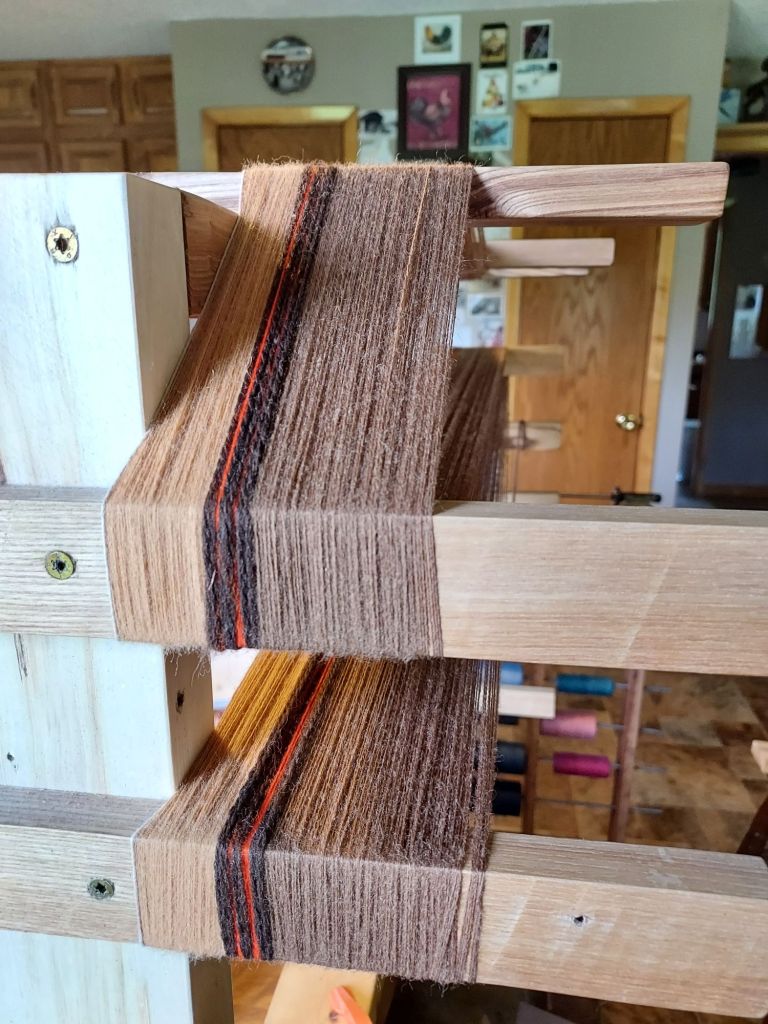
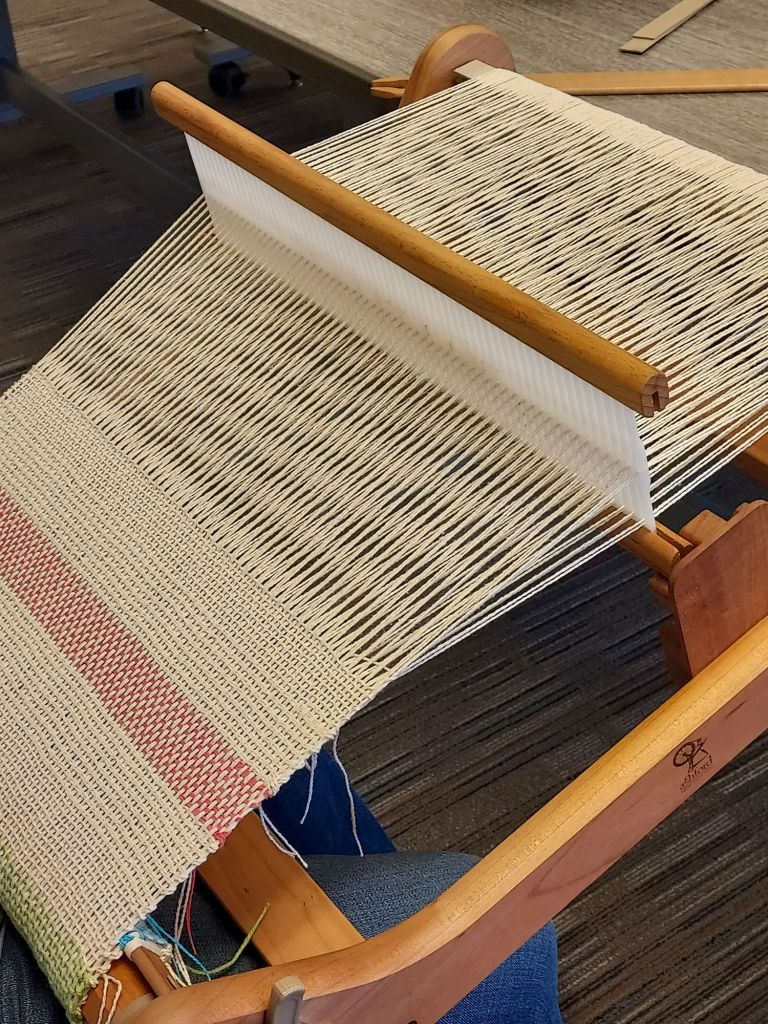
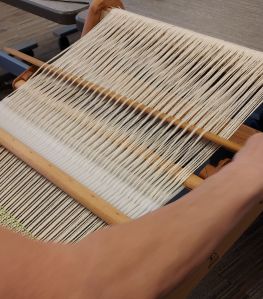
As for the weaving part of the week, I’ll share more details in another post in a few days when it’s complete. I’m proud to be working on a custom wool shawl for the Free Range Food Co-op‘s silent auction fundraiser next month. Here’s a sneak peak of part of the project on the warping board:
It’s been a hot end of May but we are chipping away at the springtime “must do” list. Planting the garden, building the new perimeter fence, and keeping everything watered and alive during this heat wave has taken up most of our days.
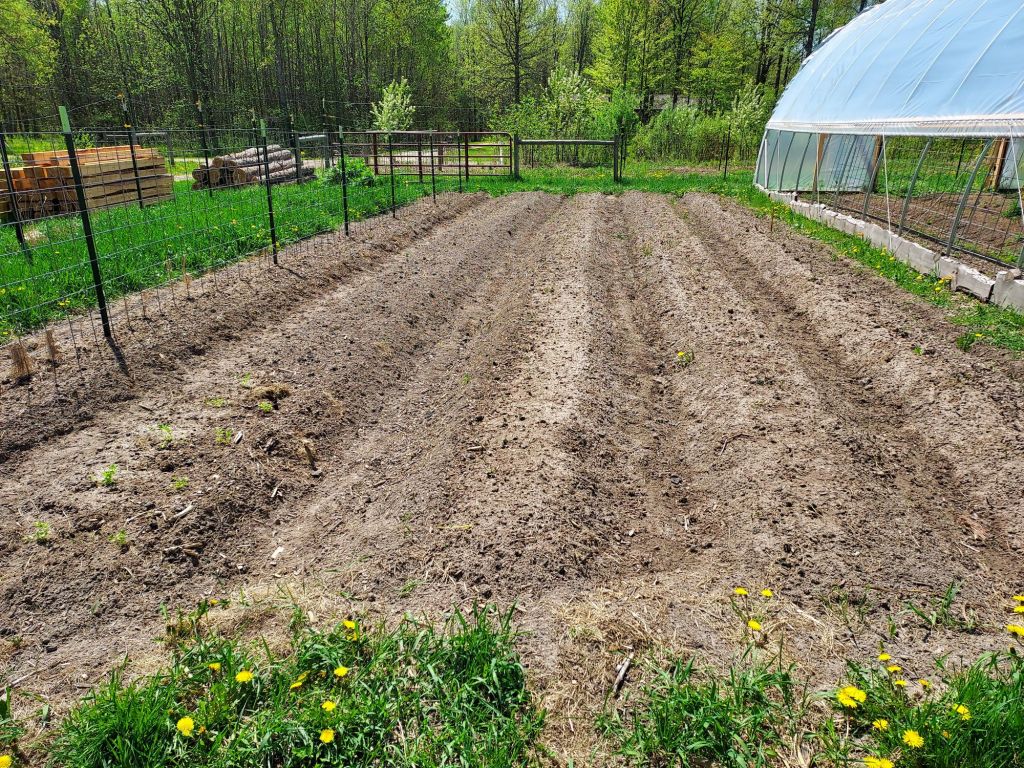
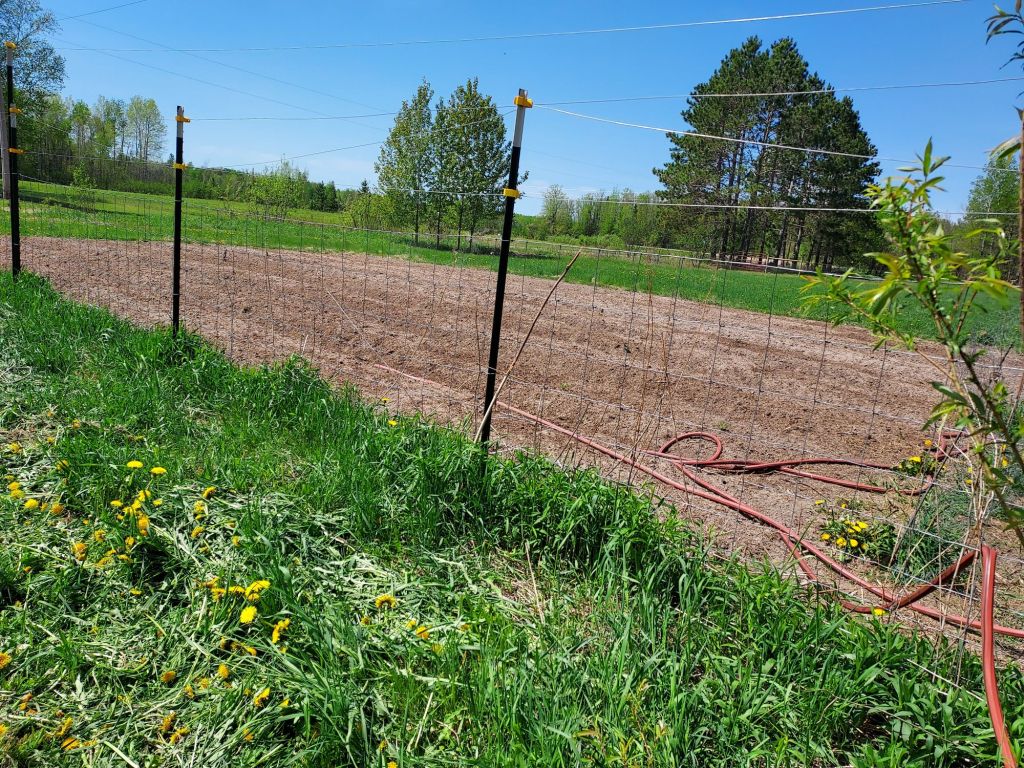
Here’s some pics of the garden beds, most things aren’t germinated yet because they were just planted. Yeah the weather had been nice but we don’t really trust Minnesota weather to put tender plants out any earlier than the last week of May. We’ve been burnedfrosted too many times!
You can see in the 3rd photo that those beds are beyond a fence… That will soon be contained within our new perimeter fence. Gotta get that installed before the corn pops up and the deer find it!
Also used this hot weather to wash a few skeins of yarn I finished in the last week. 3 skeins of alpaca and 1 of angora rabbit from a friend. The rabbit’s name was Theodore and I’m pretty sure it’s the absolute softest thing I’ve ever touched 😍 I can hardly stop squishing it and saying “oh my god it’s So. Soft.”
Anyway, using this heat to quickly dry yarn is one perk I suppose. Now, back to finish watering the garden… 🌱
Have you ever woven cotton yarn into a hand towel to use in your home? This spring I’ve had the joy of teaching people how to do exactly that!
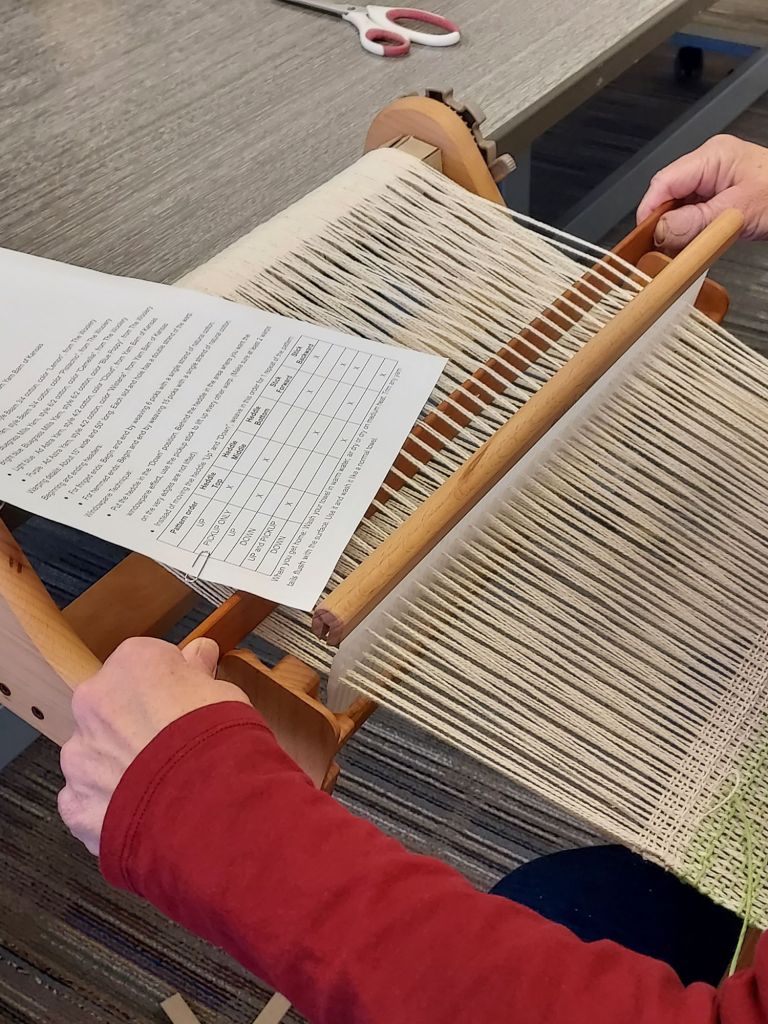
Some students had no experience with weaving, while others had woven before but wanted to try a new type of project. Using pre-warped 16” Ashford rigid heddle looms and a variety of cotton yarns, class attendees left with a handwoven hand towel to use in their home.
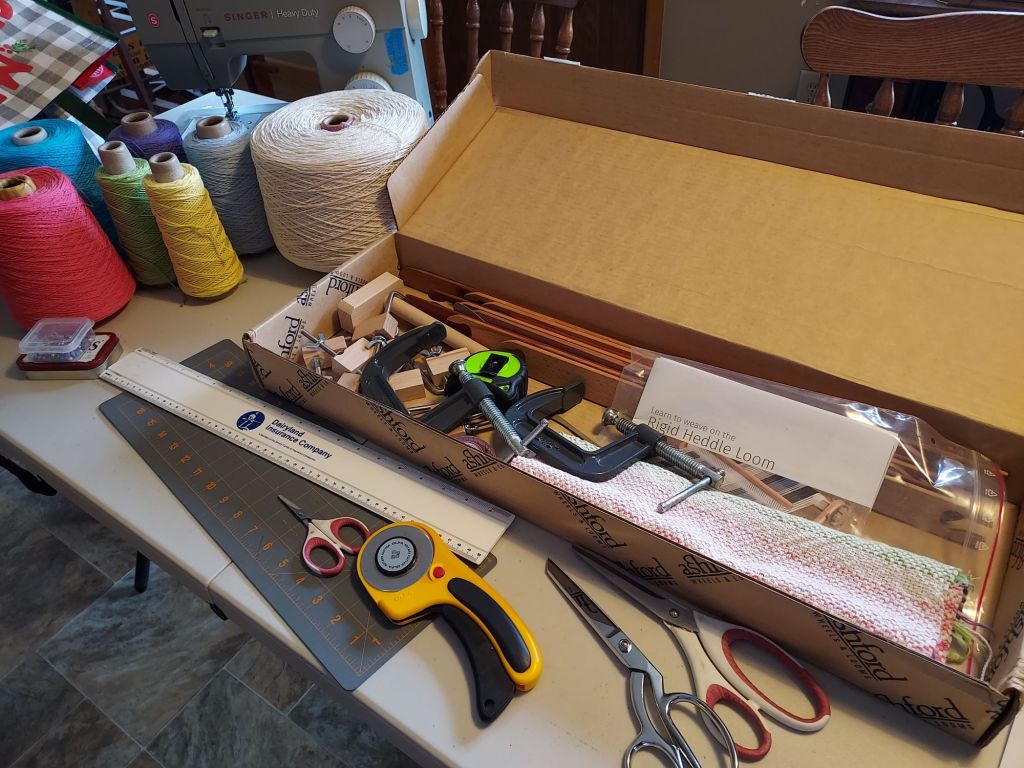
What does it take to prepare for a class like this? Well, for the attendees, they just have to show up and be ready to learn. Easy peasy! For the teacher, it’s a bit more involved:
I create handouts with info on the looms, yarns, project details, and techniques. I also type up ‘instructor notes’ to keep myself on track.
The loom for each student gets warped before the class. (Warping means all the ‘vertical’ white yarns that you see in the picture get put onto the looms ahead of time. In class the students weave in the weft ‘horizontal’ yarns.) The warping process takes about 1.5 hours per loom.
All the yarns get purchased and packed along with all the clamps, shuttles, pick-up sticks, scissors, pins, needles, the sewing machine for hems, etc.
On the day of class there’s about an hour of setup and an hour of clean up.
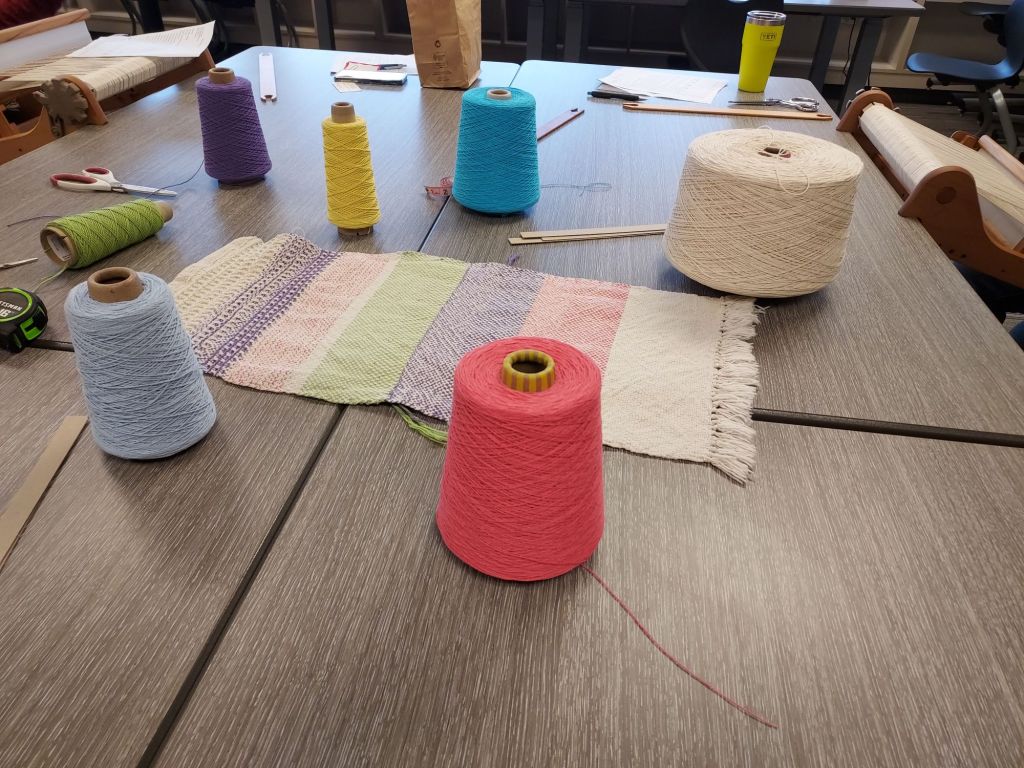
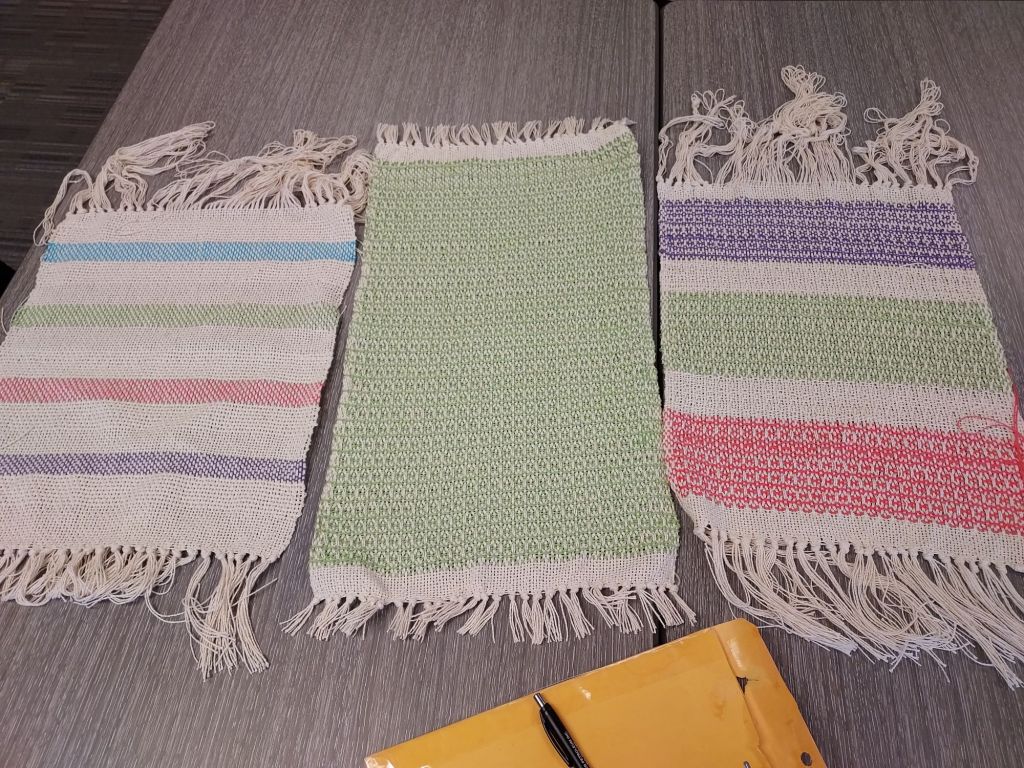
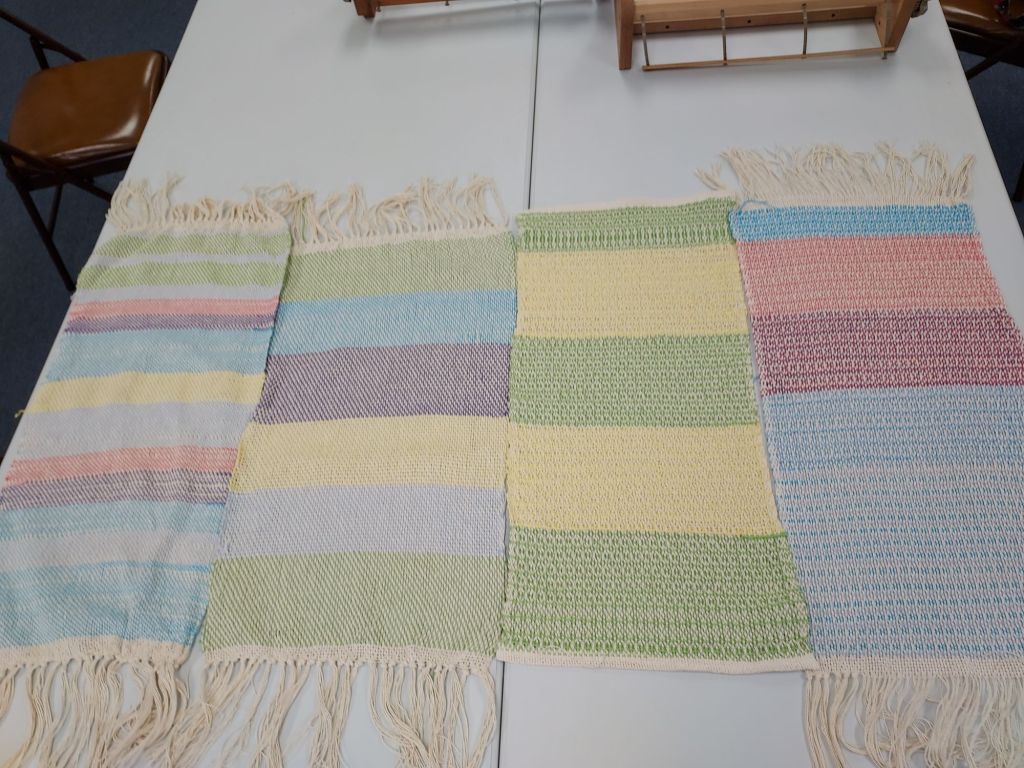
Even though the warp yarn is all natural colored cotton, there are still endless ways of weaving the weft yarn in to create a fun pattern! Since these classes were held in springtime, I bought yarns in a spring color palette. Folks had the option of weaving either a plain over-under weave or trying a more complicated pick-up stick windowpane pattern using any combination of patterns or colors they wanted. Take a look at the variety of towel designs woven with just 2 pattern and 7 color options!
I brought the sewing machine along to sew the hems, but many chose to knot the fringes on their towels instead. Either option works, though knotted fringes do have a tendency to wear out with very frequent use just because the ends of the strings fray over time. But it does lend a beautiful homemade touch!
When I was learning to weave I never thought I would get to the point of being able to teach others… not only did I feel like I didn’t know ‘enough’ to teach, but I was always the shy kid in school who would rather go live under a rock instead of doing any kind of public speaking. Through teaching my family and friends about weaving I realized I was able to share the joy I find in the craft with others by showing them how to do it too. It is so exciting to teach someone how to use simple tools to turn yarn into fabric and hear them say “oh my gosh, I’m making fabric! This is so cool!”.
Yeah, it really is so cool!
These weaving classes were hosted through the Itasca Area Schools Collaborative and their Community Education program. New classes are held twice a year in a wide variety of topics, and I’ve had a lot of fun teaching through their community ed program.
I also offer individual or small group lessons for specific projects, or can help tailor an intro-to-weaving program for a larger group like I did with the Deer River High School art class students this spring. Get in touch and let’s weave! -Shara
 Wild Edges Farm